

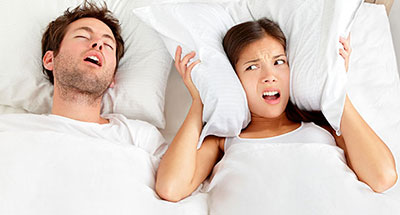
- To determine whether you might benefit from a sleep evaluation, ask yourself the following questions:
- Do you regularly have difficulty getting to sleep or staying asleep?
- Do you have a problem with snoring? Has anyone ever told you that you have pauses in breathing or that you gasp for breath when you sleep?
- Are your legs “active” at night? Do you experience tingling, creeping, itching, pulling, aching or other strange feelings in your legs while sitting or lying down that cause a strong urge to move, walk or kick your legs for relief?
- Are you so tired when you wake up in the morning that you cannot function normally during the day?
- Does sleepiness and fatigue persist for more than two to three weeks?
The most common obstructive sleep apnea symptoms include:
- Daytime sleepiness or fatigue
- Dry mouth or sore throat upon awakening
- Headaches in the morning
- Trouble concentrating, forgetfulness, depression, or irritability
- Night sweats
- Restlessness during sleep
- Sexual dysfunction
- Snoring
- Sudden awakenings with a sensation of gasping or choking
- Difficulty getting up in the mornings
Symptoms of OSA in children may not be as obvious. They include:
- Bedwetting
- Choking or drooling
- Excessive sweating at night
- Inward movement of the ribcage when inhaling
- Learning and behavioral disorders
- Poor school performance
- Sluggishness or sleepiness (often misinterpreted as laziness in the classroom)
- Snoring
- Teeth grinding
- Restlessness in bed
- Pauses or absence of breathing
- Unusual sleeping positions, such as sleeping on the hands and knees, or with the neck hyperextended